
UK Bets for NBA: The Complete Data-Driven Guide for British Punters
 Available in US
Why NBA Betting Is Booming Across Britain
I placed my first NBA bet from a flat in Clapham in 2017, squinting at a phone screen at half one in the morning while Giannis Antetokounmpo was busy dismantling the Pacers. The spread was wrong — I could feel it in my bones, and the numbers confirmed it. That bet won by six points. Nine years later, I'm still up at ungodly hours dissecting NBA lines, but the landscape around me has changed beyond recognition.
Back then, NBA betting in Britain was a curiosity — a niche corner of sportsbooks that most punters scrolled past on their way to the Premier League. Today, average NBA viewership on Prime Video in the UK has surged 312% year on year in the 2025-26 season, and the NBA London Game at the O2 Arena pulled 18,424 fans through the doors in January 2026. The global basketball betting market sits at an estimated .5 billion and is projected to reach .9 billion by 2032. This is not a niche any more.
UK Remote Betting GGY
£2.4 billion gross gambling yield from remote betting, April 2023 — March 2024
NBA UK Viewership Growth
312% year-on-year increase on Prime Video in the 2025-26 season
London Game 2026 Attendance
18,424 at the O2 Arena — viewership up 90% compared to the last London game in 2019
Global Basketball Betting Market
.5 billion in 2023, projected to hit .9 billion by 2032
What has not changed is the quality of information available to UK punters. The top search results for NBA betting in Britain are still dominated by bookmaker promo pages and recycled guides that mention "check the stats" without citing a single statistic. None of them reference Gambling Commission data, none discuss the Remote Gaming Duty increase that took effect in April 2026, and none mention the FBI betting integrity investigation that shook the league in 2025. That gap is why this guide exists.
Over the next several thousand words, I'm going to walk you through everything a British NBA bettor needs: market types, odds formats, strategy frameworks, regulatory changes, and the integrity questions that the rest of the industry pretends do not exist. Every claim is backed by a number. Every number has a source. Let's get into it.
The UK processes roughly 290 million online sports bets every single month — and the share going to basketball markets has been climbing steadily since Prime Video began broadcasting NBA games.
The Five Numbers and Three Moves That Define NBA Betting in Britain Right Now
- NBA viewership on Prime Video in the UK is up 312% year on year — basketball betting demand is following the same trajectory.
- Remote Gaming Duty jumped from 21% to 40% in April 2026, which will compress bookmaker margins and likely tighten the odds available to punters.
- Five core bet types — moneyline, spread, totals, props, futures — each price a different dimension of the game. Confusing them is the fastest way to lose money.
- The 2025 FBI scandal (34 indictments) exposed prop market manipulation risks. Bet props with open eyes and diversify your market exposure.
- Set deposit limits and session timers before late-night NBA sessions begin. The tools exist at every UKGC-licensed operator — use them proactively, not reactively.
The UK NBA Betting Landscape in Numbers
Three years ago, if you told me that basketball would be the sixth most popular sport among 18-to-24-year-olds in Britain, I would have asked what you were drinking. Football, rugby, cricket, tennis, golf — sure. But basketball? The numbers do not lie. Youth participation in basketball across the 14-to-25 age group has jumped 65% since 2018 according to Basketball England, and among children aged 11 to 15, basketball is now the second most popular sport after football. A generation of British kids grew up watching LeBron highlight reels on YouTube, and now they are old enough to open betting accounts.
That demographic shift feeds directly into the betting market. Ten percent of the UK population participates in online sports betting. The remote betting sector generated a gross gambling yield of 2.4 billion pounds between April 2023 and March 2024, and online GGY grew another 8% year on year to 1.42 billion pounds in Q2 2025 alone. Those are aggregate figures across all sports, but the NBA's share of that pie has been expanding faster than almost any other category.
NBA content consumption hit 1.3 billion hours globally across linear and streaming platforms in the 2025-26 season — a 93% increase from the previous year.

The engine behind that growth in Britain has a name: Prime Video. When Amazon's 11-year, .9 billion media rights deal kicked in for the 2025-26 season, it brought NBA games into millions of UK living rooms for the first time on a mainstream platform. Alex Green, Managing Director of Prime Video Sport International, put it bluntly when he said these record audiences demonstrate an untapped demand for the NBA in Europe, with fans consistently tuning in and making basketball part of their weekly sports schedule. The viewership spike across European markets hit 444%, with the UK alone more than tripling its previous numbers — a structural shift driven by accessible broadcasting, not a one-off curiosity.
UK Online Sports Bettors
10% of the population participates in online sports betting
Monthly Online Bets
Approximately 290 million placed on real events each month
NBA US Viewership
170 million viewers across ABC, ESPN, Prime Video, NBC and NBA TV in the 2025-26 season — a 24-year high
On the American side of the Atlantic, the NBA's reach is staggering in its own right. A total of 170 million viewers watched NBA basketball through American broadcast and streaming partners in the 2025-26 season — the highest figure in 24 years and an 86% increase from the prior season. That viewership drives the betting handle: the US sports betting market generated .89 billion in revenue from a total handle of 6.94 billion in 2025, with basketball among the top three wagered sports.
What matters for UK punters is the knock-on effect. American liquidity sets the sharpest NBA lines in the world. When a UK bookmaker posts a spread for a Celtics-Bucks game, that line originates from the same market-making ecosystem fed by billions of dollars in US handle. You are not betting in a vacuum — you are participating in a global price discovery mechanism that starts in Las Vegas and filters through to your phone in Manchester or Edinburgh.
The 2026 NBA London Game underscored how seriously the league is investing in Britain. Magic versus Grizzlies at the O2 in January sold out to a capacity crowd, with UK viewership up 90% compared to the last London game in 2019. A regular-season game is scheduled for Manchester's Co-op Live arena in 2027 — the first ever on British soil outside London. Basketball is not just growing here; it is putting down roots.
Basketball ranks as the sixth most popular sport among 18-to-24-year-olds in Britain — and the second most popular among children aged 11 to 15, behind only football.
Those numbers set the stage — now let's look at how to actually put them to work across NBA betting markets.
Core NBA Bet Types Every Punter Should Know
I once watched a friend lose forty quid on an NBA bet he did not understand. He thought he had backed the Lakers to win. He had actually taken the Lakers minus 7.5 on the spread. They won by three. His face when I explained what happened was the moment I decided every NBA bettor in Britain needs a proper education in market types before they stake a penny.
NBA betting breaks down into five core categories: spread, moneyline, totals, player props, and futures. Each carries distinct risk profiles, margin structures, and strategic angles. If you are coming from football betting, some of these will feel familiar — handicaps, for instance, work on similar logic — but the specifics diverge in ways that catch newcomers off guard. The scoring frequency in basketball (teams regularly put up 100-plus points per game) creates a fundamentally different market dynamic than the low-scoring, draw-possible world of the Premier League.
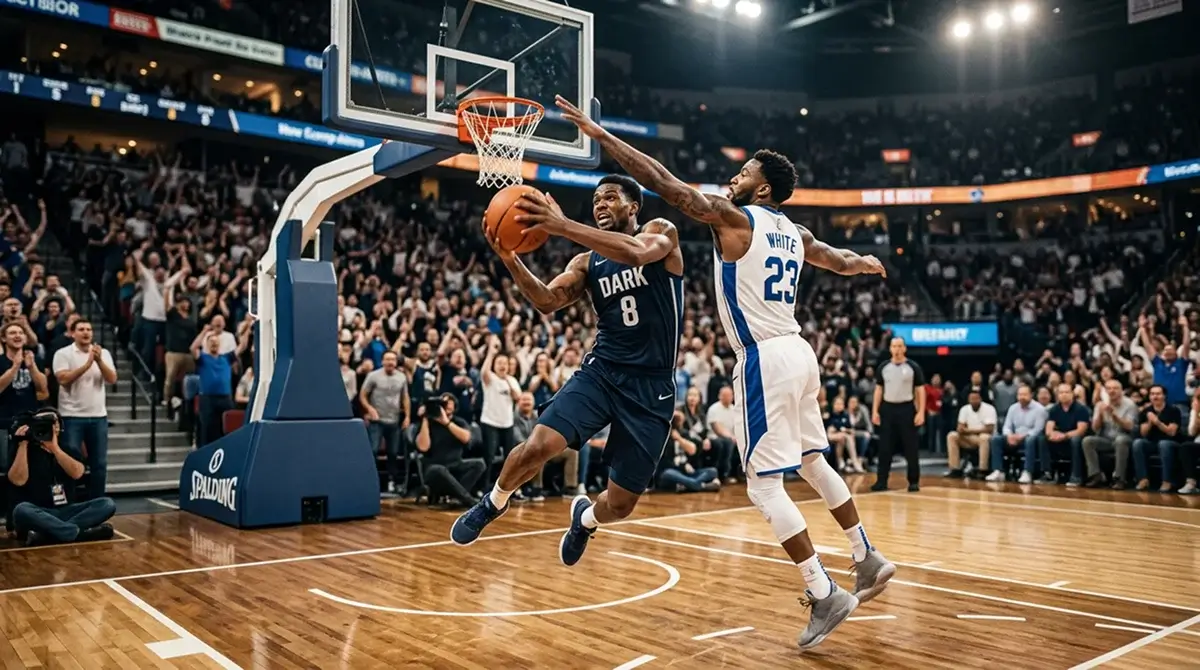
Moneyline — a straight bet on which team wins the game. No spread, no margin. If your team wins by one or by thirty, you cash the ticket. Overtime counts.
Spread (Handicap) — the bookmaker assigns a points advantage or disadvantage to each team. You are not just picking a winner; you are predicting whether a team wins by more than the spread or keeps the game closer than expected.
Totals (Over/Under) — a bet on the combined final score of both teams. The bookmaker sets a number; you decide whether the actual total lands over or under it.
These three form the backbone of every NBA betting slip. Player props and futures add depth and specialisation. I will walk through each in the sub-sections below, but the key principle to internalise is that each market type prices a different dimension of the game. The moneyline prices the winner. The spread prices the margin. Totals price the pace and efficiency. Props price individual performance. Futures price long-term outcomes. Confusing them — or treating them interchangeably — is the fastest route to a depleted bankroll.
For a deeper exploration of NBA spread betting mechanics, ATS records, and worked examples, the dedicated cluster article covers what I can only summarise here.
ATS (Against the Spread) — a team's record of covering the bookmaker's point spread. A team can have a losing win-loss record but a profitable ATS record if they consistently beat expectations.
Spread and Handicap Betting
Spread betting is where the NBA separates itself most sharply from football for UK punters. In the Premier League, Asian handicaps deal in half-goals and quarter-goals, and a one-goal swing can flip the outcome. In basketball, the spread operates in half-point increments across a scoring range that routinely exceeds 200 combined points. A typical NBA spread might sit at -5.5 or +8.5 — numbers that feel alien if you have spent your betting life in football territory.
The mechanics are straightforward. If a team is listed at -6.5, they need to win by seven or more for the spread bet to pay out. If you take the other side at +6.5, that team can lose by six and your bet still wins. The half-point eliminates pushes, which is deliberate — bookmakers do not want ties on spreads any more than you want the ambiguity of getting your stake back.
Spread Bet Calculation
Suppose Team A is -4.5 at decimal odds of 1.91 and you stake 10 pounds. Team A wins by 8 points. They covered the spread (8 is greater than 4.5), so your bet wins. Payout: 10 x 1.91 = 19.10 pounds. Profit: 9.10 pounds.
Now imagine the same game, but Team A wins by only 3. They did not cover (-4.5 required a win by 5 or more). Your bet loses. You are down 10 pounds.
UK bookmakers often label this market as "handicap" rather than "spread" — the terms are interchangeable for NBA purposes. Where it gets interesting is in the line movement. NBA spreads shift constantly in the hours before tip-off, driven by injury reports, lineup confirmations, and sharp money on the American side. Monitoring those movements is where informed punters find edges, and the spread betting guide covers that process in detail.
Push — when the final margin lands exactly on the spread number (only possible with whole-number spreads like -5.0), resulting in the stake being returned. Half-point spreads eliminate this outcome.
Moneyline Bets
The moneyline is the purest bet in basketball: pick the winner, get paid. No spread to worry about, no margin to calculate. If the team you back wins the game — whether by one point in overtime or by a 30-point blowout — you collect.
The catch is in the pricing. Because NBA games rarely end in upsets compared to, say, FA Cup third-round matches, heavy favourites carry short prices that compress your return. A team favoured by 10 points on the spread might sit at 1.15 on the moneyline in decimal odds, meaning a 10-pound stake returns just 11.50. The risk-reward ratio on strong favourites is rarely worth it on the moneyline alone — you are tying up capital for minimal profit while still exposed to the occasional shock defeat.
Moneyline Odds Example
Favourite: 1.25 decimal (1/4 fractional) — implied probability 80%. Stake 20 pounds to win 5 pounds profit.
Underdog: 4.00 decimal (3/1 fractional) — implied probability 25%. Stake 20 pounds to win 60 pounds profit.
The gap between 80% and 25% leaves 5% — that's the bookmaker's margin baked into this market.
Where moneyline bets earn their place in my workflow is on underdogs in specific situations: back-to-back scheduling disadvantages for the favourite, early-season games where rosters are still gelling, or any spot where I believe the true win probability exceeds what the odds imply. The moneyline on a live underdog who has cut a 15-point deficit to 3 in the third quarter can offer extraordinary value — but that's territory for live betting, which I'll address later.
Totals (Over/Under)
Totals strip the NBA down to a single question: will the combined score of both teams land above or below the bookmaker's number? A typical regular-season totals line sits somewhere between 215 and 235 points, depending on the matchup. Two fast-paced, offence-first teams might see a line at 232.5. A grinding, defence-heavy affair between two teams ranked in the bottom ten for pace could open at 212.5.
The beauty of totals is that you do not need to pick a winner. You are betting on the character of the game itself — its tempo, efficiency, and defensive intensity. I find totals particularly useful when I have a strong read on how a game will be played but no confidence in which side wins. Two evenly matched teams can produce a lopsided total if one side cannot stop the other in transition.
Totals Bet Calculation
The line is set at 224.5. You take the over at 1.91 decimal odds with a 15-pound stake. The game finishes 118-112, a combined 230 points. That clears 224.5, so the over wins. Payout: 15 x 1.91 = 28.65 pounds. Profit: 13.65 pounds.
Had the game finished 108-104 (combined 212), the under would have won, and your over bet would have lost.
A critical detail that catches beginners: overtime points count towards totals in standard markets. A game sitting at 210 combined after regulation can sail over a 224.5 line with a high-scoring overtime. Quarter and half totals, by contrast, settle at the end of that specific period — overtime does not apply. The distinction matters enormously, and I have seen it cost punters who assumed all totals markets behaved the same way.
Player Props and Game Props
Player props have exploded in the last three years, and for good reason — they let you bet on individual performance rather than game outcomes. Points scored, rebounds grabbed, assists dished, three-pointers made, even steals and blocks. The most common format is an over/under on a specific stat line: will Player X score over or under 24.5 points tonight?
Combo props bundle multiple stat categories for a single player — points plus rebounds plus assists, for instance — into one over/under line. These "PRA" markets (points-rebounds-assists) have become a staple at UK bookmakers and form the building blocks of bet builder selections.
The appeal is obvious: you can profit from your knowledge of a specific player's tendencies regardless of whether their team wins or loses. If you have studied a centre's rebounding numbers on back-to-back nights and know he averages 2.3 fewer boards in those spots, that's an actionable edge on the under.
But props carry a warning that the rest of the industry has been slow to address. NBA Commissioner Adam Silver has been blunt about the manipulation risk, noting that it is too easy to manipulate something which seems otherwise small and inconsequential to the overall score — a couple of rebounds, an extra assist. The 2025 FBI investigation, which led to 34 indictments including active and former NBA figures, was rooted partly in prop market exploitation. I cover the full scandal and its fallout in the player props deep-dive, but the takeaway for UK punters is straightforward: prop markets are where the value lives, and also where the integrity risk concentrates. Bet with open eyes.
Futures and Outright Markets
Futures betting asks you to take a position on outcomes that will not be settled for weeks or months. Who wins the NBA championship? Which player takes the MVP award? Which team finishes top of the Eastern Conference? These markets open before the season tips off and remain active — with shifting odds — through the playoffs.
Outright markets include championship winner, conference winner, division winner, MVP, Rookie of the Year, Defensive Player of the Year, and a growing list of season-long propositions. UK bookmakers typically offer all of these, though market depth varies.
The strategic appeal of futures lies in the timing. Odds on a championship contender are longest before the season starts, when uncertainty is at its peak. As the season progresses and information accumulates — injuries, trades, form runs — those odds shorten for genuine contenders and lengthen for pretenders. Patient punters who identify value early and lock in pre-season prices can find themselves holding tickets at odds that the market would never offer mid-season. The flip side is that your money is tied up for months, and the variance across an 82-game season is brutal. I have had futures bets that looked golden in January and worthless by March because of a single ACL tear.
Hedging becomes an option during the playoffs. If your championship pick reaches the Finals at shorter odds than you originally took, you can bet the other side to guarantee a profit regardless of outcome. The maths is simple, the discipline is not. Futures require patience that most punters — myself included, in my earlier years — struggle to maintain.
A Quick Look at UK Odds Formats
Most British punters grew up reading fractional odds — 5/1, 7/2, 11/4. NBA markets originate in American odds format (-110, +150) and get converted by UK bookmakers into either decimal or fractional form. Understanding the conversion matters because it reveals what the bookmaker actually thinks the probability of an outcome is, and more importantly, how much margin they have embedded in the price.
Format Conversion Example
American: -110 (risk 110 to win 100). Decimal: 1.91. Fractional: 10/11. Implied probability: 52.4%.
American: +200 (risk 100 to win 200). Decimal: 3.00. Fractional: 2/1. Implied probability: 33.3%.
When both sides of a moneyline are priced at -110, the implied probabilities sum to 104.8% — that excess 4.8% is the bookmaker's overround.
The overround — also called the vig or juice — is the gap between what the odds imply and actual 100% probability. In mature US markets, the average hold rate hit a record 10.15% in 2025, meaning bookmakers kept just over ten pence of every pound wagered. UK bookmakers operating in the NBA space typically carry similar margins on main markets, though prop and parlay margins tend to be significantly wider.
I default to decimal format for all my NBA analysis because the maths is cleaner: multiply your stake by the decimal odds to get the total return, subtract the stake for profit. No faffing about with numerators and denominators. But the format you use matters less than your ability to convert odds into implied probability and compare that against your own assessment of the true probability. That skill — and the framework for developing it — is covered comprehensively in the NBA odds and implied probability guide.
Four Strategy Pillars for NBA Wagering
Early in my career I chased tips. Someone on a forum said "take the Celtics minus three" and I did, without knowing why. I won some. I lost more. The turning point came when I stopped looking for answers and started building a process. Nine years in, I can distil that process into four pillars that underpin every NBA wager I place. None of them involve "gut feeling".
Pillar one: bankroll management. This is not glamorous. It is not exciting. It is also the single biggest determinant of whether you survive a full 82-game NBA season or blow up by December. I allocate a fixed bankroll at the start of each season — measured in units, not pounds — and stake between one and three units per bet depending on my confidence level. A standard bankroll of 50 to 100 units means individual losses never threaten the whole. The NBA season is a marathon: 1,230 regular-season games across six months, plus playoffs. You need capital durability, not home-run swings.
Pillar two: schedule analysis. The NBA's 82-game schedule creates fatigue patterns that most casual punters ignore entirely. Teams playing the second night of a back-to-back — two games on consecutive evenings — historically underperform against the spread. Travel compounds the effect: a team flying from Miami to Portland for the second leg of a back-to-back faces altitude, timezone, and recovery disadvantages that are measurable in the data. I track these spots obsessively, and they remain one of the most reliable edges in the sport.
Do
- Set a fixed unit size before the season starts and stick to it regardless of recent results.
- Factor in rest days, travel distance, and altitude when evaluating spread and totals lines.
- Cross-reference pace factor when setting your own totals estimates — fast teams in slow matchups confuse naive models.
- Track your bets in a spreadsheet with staking, odds, and outcome data. Review monthly.
Don't
- Chase losses by increasing stake size after a bad night. The schedule does not care about your recent form.
- Bet every game. Selectivity is the only sustainable edge — three strong plays a night beats twelve marginal ones.
- Ignore the injury report. A single star player sitting out can swing a spread by 4-6 points.
- Trust "consensus picks" without verifying the logic. Public money moves lines in predictable ways that sharps exploit.

Pillar three: pace and efficiency modelling. NBA games are a function of possessions. More possessions mean more shots, which mean more points, which push totals higher. The pace factor — estimated possessions per 48 minutes — varies dramatically across teams. A matchup between the two fastest-paced teams in the league will produce a fundamentally different game from a clash of two defensive grinders. I build simple pace-adjusted models that estimate a game's expected total and compare it to the bookmaker's line. When the gap exceeds a threshold — usually two to three points — that's a signal worth acting on.
Pillar four: record-keeping and review. If you are not tracking your bets, you are guessing about your own performance. I log every wager with the date, market, odds, stake, and result. Monthly reviews reveal patterns: am I profitable on totals but bleeding on spreads? Are my live bets outperforming pre-game? Which situations generate the best return on investment? The data answers questions that memory distorts. You can explore the full framework, including how to build a basic NBA model, in the strategy deep-dive.
Strategy is not about predicting outcomes — it is about identifying situations where the odds are wrong more often than they are right. The four pillars above do not guarantee profit. They guarantee that your decisions are structured, repeatable, and reviewable — which is the only foundation that scales.
Live Betting on NBA Games from the UK
At 1:47 in the morning on a Tuesday in February, I am watching the Nuggets trail the Suns by 14 at halftime. The pre-game spread was Denver -3.5. The live spread has swung to Phoenix -6.5. Denver's starters are still healthy, they shot 28% from three in the first half against their season average of 38%, and Jokic has only attempted six shots. I take Denver +6.5 live. They outscore Phoenix by 22 in the second half. That's the appeal of in-play NBA betting — and also the reason it accounts for approximately 50% of total handle in mature American markets.
Live betting on NBA games from Britain works like live football betting in structure but operates at a completely different speed. Basketball scoring happens on nearly every possession — roughly every 15 to 20 seconds during active play. Odds update continuously, spreads shift by the minute, and totals adjust as the game's pace reveals itself. UK bookmakers offer in-play moneyline, spread, totals, quarter winners, next team to score, and an expanding menu of micro-markets that refresh throughout the game.
Stream delay is the silent killer of live NBA betting. If your video feed runs 15 to 30 seconds behind real-time — which is common for UK streaming platforms — the bookmaker's odds have already adjusted to events you have not yet seen. I never rely solely on a stream for in-play decisions; I supplement with live box score trackers that update in near-real-time.
The practical challenge for UK punters is timing. Most NBA games tip off between 11pm and 3:30am GMT, with weekend afternoon slots starting around 8pm. That means live betting is inherently a late-night activity, which compounds the cognitive load of making rapid decisions under fatigue. I have learned — the hard way — to set a hard stop time for my in-play sessions. No bet placed after 2am that I have not pre-identified as a target. The discipline saves money and sanity in roughly equal measure.
In mature US sports betting markets, live and in-play wagers account for roughly half of the total money wagered — a proportion that has been climbing steadily since 2020 and is now accelerating in the UK.
UK Regulation and Tax Changes Affecting NBA Bets
In April 2026, the Remote Gaming Duty jumped from 21% to 40%. That is not a typo. The rate nearly doubled overnight, and a new Remote Betting Duty of 25% is set to follow in April 2027. HM Treasury projected these changes would generate 810 million pounds in additional revenue for 2026-27, rising to 1.16 billion pounds annually by 2030-31. The Treasury's own framing was explicit: the government targeted the biggest increase in tax on remote gaming, which it considers to have lower operating costs and to be more harmful than other forms of gambling.
Why should a punter care about a tax that bookmakers pay, not bettors? Because operators do not absorb that kind of cost increase silently. The money comes from somewhere, and the most likely sources are thinner odds, reduced promotional offers, tighter market availability, and slower expansion into niche sports like basketball. If you noticed NBA spreads carrying slightly worse prices in the spring of 2026 compared to the autumn of 2025, the duty increase is the mechanism behind it.
Remote Gaming Duty
21% rising to 40% from April 2026
Remote Betting Duty
New 25% rate from April 2027
Projected Revenue
810 million pounds in 2026-27, growing to 1.16 billion by 2030-31
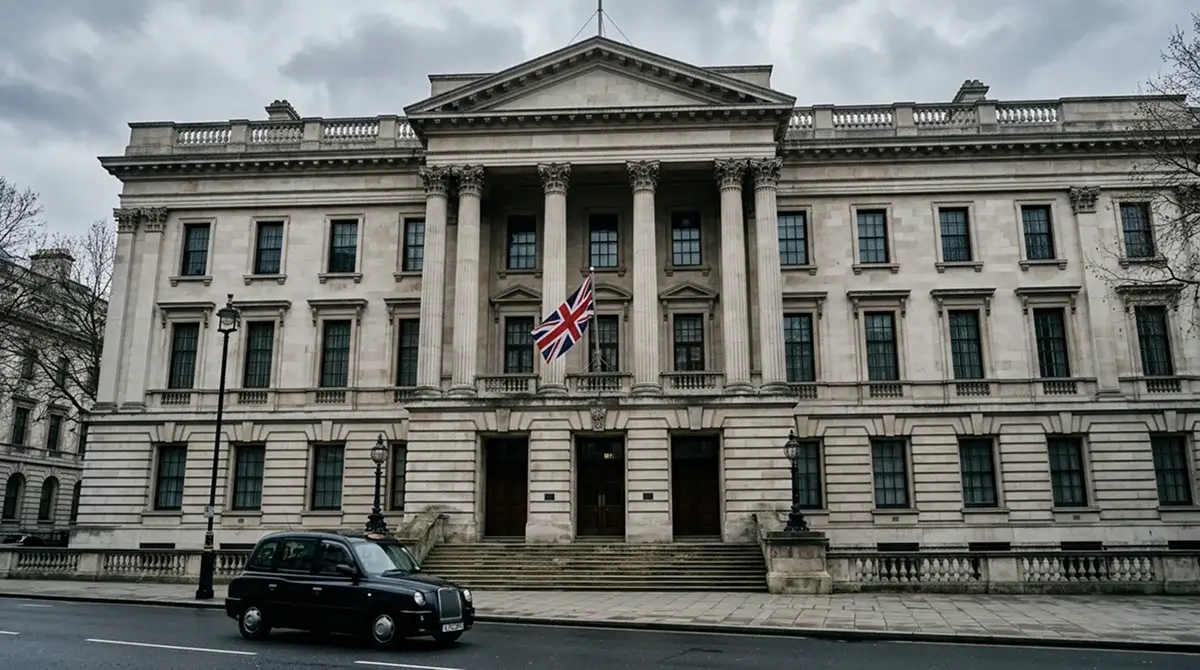
Beyond taxation, the Gambling Commission has been ratcheting up consumer protection requirements. Since February 2025, UK online operators must conduct financial vulnerability checks on customers — a process designed to identify and protect bettors who may be wagering beyond their means. From May 2025, operators must obtain granular opt-in consent for marketing communications, broken down by product and channel. You can no longer be signed up for promotional emails about NBA markets just because you ticked a general marketing box during registration.
The financial vulnerability check is not about punishing bettors — it is about flagging patterns that suggest someone is betting money they cannot afford to lose. If you are asked for additional documentation by a bookmaker, that process is now a legal requirement under UKGC rules, not an arbitrary inconvenience.
The broader regulatory picture in Britain stands in sharp contrast to the US, where sports betting regulation still operates on a fragmented state-by-state basis. NBA Commissioner Adam Silver has publicly advocated for federal legislation rather than the current patchwork, noting the difficulty of monitoring promotion and advertising across dozens of jurisdictions. The UK's national framework under the Gambling Commission is centralised, established, and — as the 2026 duty changes demonstrate — willing to extract significantly more revenue from operators than it did even two years ago. Whether that framework ultimately benefits punters or constrains them depends on how operators respond to the margin pressure.
Betting Integrity: What the 2025 Scandal Means for Punters
On a single day in October 2025, the FBI and the US Attorney's office for the Eastern District of New York unsealed indictments against 34 individuals connected to two federal investigations into illegal NBA betting. The names included Terry Rozier, then an active player, and Chauncey Billups, a former champion turned coach. Joseph Nocella Jr., the US Attorney who led the prosecution, described the scheme as an insider sports betting conspiracy that exploited confidential information about NBA athletes and teams. It was the largest integrity crisis to hit American professional basketball in decades.
The reaction from the league was immediate. Adam Silver, who has been the most prominent pro-legalisation voice in professional sports since his landmark 2014 op-ed calling for regulated betting, acknowledged the severity directly. He described his initial reaction as deeply disturbed, saying there is nothing more important to the league and its fans than the integrity of the competition. But Silver also pointed to the surveillance infrastructure that legalisation enables: with the regulated structure of legalised betting, the league can monitor aberrational behaviour in ways that were unimaginable years ago — large bets from new accounts, suspicious geolocation patterns, unusual betting volume on obscure markets.
For UK punters, the scandal's relevance is indirect but real. The markets you bet on are priced off American liquidity. If insiders are manipulating outcomes or stat lines in the US, those manipulated results affect the settlement of your bets in Britain. The Gambling Commission does not directly oversee NBA game integrity — that responsibility sits with the league and US law enforcement — but UKGC-licensed operators are required to report suspicious betting patterns, creating a secondary detection layer.
The 2025 scandal concentrated on prop markets, where small statistical outcomes (a few extra rebounds, an additional turnover) can be influenced without affecting the final score. If you bet props heavily, understand that these markets sit at the intersection of the most value and the most vulnerability. Diversify your market exposure, and treat any statistically implausible line movement on a minor prop as a red flag, not an opportunity.
The longer-term impact is still unfolding. Silver has signalled that the league is working with betting companies to implement additional controls on prop markets, particularly for players on two-way contracts or those at the fringes of rosters where financial incentives for manipulation are highest. Whether those controls tighten the markets available to UK bettors or simply improve their integrity remains to be seen — but the days of pretending that NBA betting operates in a corruption-free vacuum are over.
Responsible Gambling Tools and UKGC Requirements
I have never met a serious NBA bettor who has not, at some point, stayed up until 4am chasing a bad night. The time-zone mismatch between the UK and the NBA schedule creates a uniquely dangerous environment for impulsive behaviour. You are tired. The game is live. The in-play spread looks wrong. You double your stake to recover the evening's losses. I did exactly this in my second year, and it took a fortnight to recover — financially and psychologically. Responsible gambling tools are not a compliance box-tick; for NBA bettors in Britain, they are structural protection against the worst version of yourself at 3am.

Pre-Session Checklist for Late-Night NBA Betting
- Set a deposit limit before the evening's games begin — not during.
- Activate a session timer if your bookmaker offers one. A 90-minute cap is enough for two games of pre-game analysis and one in-play window.
- Pre-identify your target bets. If a game is not on your list, it does not get a stake tonight.
- Never log in after consuming alcohol. This is not moralising — it is bankroll preservation.
- Review your weekly P&L before placing any bet. If you are down more than five units for the week, tonight is a watch-only night.
The UKGC's affordability and vulnerability checks — covered in the regulation section above — add an external layer of protection. But external controls catch problems after they develop. Internal controls prevent them. The most effective responsible gambling practice I have adopted is simple: I decide my maximum loss for the evening before any game tips off, and I close the app when I hit it. No exceptions, no "just one more game". The 82-game NBA season provides 1,230 regular-season opportunities. Missing tonight's slate costs nothing. Chasing losses at 3am costs everything.
Every UKGC-licensed operator is required to offer deposit limits, cool-off periods (24 hours to 6 weeks), and self-exclusion. GamStop provides a single self-exclusion mechanism that covers all licensed UK gambling sites simultaneously. If the tools exist and you are not using them, the question is why.
The gender split in UK sports betting is stark: 15% of men versus 4% of women participate. But participation rates tell you nothing about individual risk. Problem gambling does not discriminate by demographic, and the late-night, high-frequency nature of NBA betting concentrates several known risk factors — fatigue, isolation, rapid feedback loops — into a single activity. Use the tools. Set the limits before you need them, not after.
Frequently Asked Questions About UK NBA Bets
Is NBA betting legal in the UK?
Yes. Betting on the NBA is fully legal in Britain through any operator licensed by the UK Gambling Commission (UKGC). The Gambling Act 2005 established the regulatory framework, and the UKGC oversees all remote betting activity conducted by or targeted at UK residents. You can verify any bookmaker's licence status directly on the Commission's public register. What is not legal is betting through unlicensed offshore operators — doing so removes every consumer protection that the UKGC framework provides.
What are the main types of NBA bets available to UK punters?
The five core NBA bet types are moneyline (picking the game winner), spread or handicap (betting on the margin of victory), totals or over/under (betting on the combined score), player props (individual stat-based bets like points, rebounds or assists), and futures or outrights (long-term markets such as championship winner or MVP). Most UKGC-licensed bookmakers offer all five, along with derivatives like bet builders, quarter betting, and same-game parlays. Market depth varies between operators, particularly for props and micro-markets.
Which NBA bet types are affected by overtime?
Moneyline, spread, and full-game totals all include overtime in their settlement. If a game goes to an extra period, the final score after overtime determines the outcome of these bets. Quarter bets, half-time bets, and period-specific markets do not include overtime — they settle based on the score at the end of the relevant period only. This distinction is critical for totals bettors in particular: a game that sits under the number at the end of regulation can be pushed over by overtime scoring. Always check the specific settlement rules listed by your bookmaker, as minor variations exist.
How do NBA odds work in decimal and fractional formats?
NBA odds originate in American format (e.g. -110 or +200) and are converted by UK bookmakers into decimal or fractional odds. Decimal odds represent the total return on a one-pound stake: odds of 1.91 mean a one-pound bet returns 1.91 pounds (0.91 profit). Fractional odds express profit relative to stake: 10/11 means you win 10 pounds for every 11 staked. To convert between them: decimal odds minus 1 gives the fractional profit per unit staked. The implied probability is calculated as 1 divided by the decimal odds — so 1.91 implies a 52.4% probability. The sum of implied probabilities across all outcomes will exceed 100%, and that excess is the bookmaker's margin.
What time do NBA games tip off in the UK?
Most NBA games tip off between 11pm and 3:30am GMT (midnight to 4:30am BST during summer). The earliest weeknight starts typically correspond to 7pm Eastern Time in the US, which is midnight in London. Weekend afternoon games in the US can start as early as 5pm or 6pm Eastern, translating to 10pm or 11pm GMT — the most accessible slots for UK viewers. Prime Video's marquee weekend broadcasts have been deliberately scheduled to capture European primetime audiences, with some tip-offs hitting around 8pm GMT on Saturdays.
Can I bet on NBA player props from the UK?
Yes. The overwhelming majority of UKGC-licensed bookmakers offer NBA player prop markets. Standard offerings include points, rebounds, assists, three-pointers made, and combined stat lines (points-rebounds-assists). Market depth varies: major operators typically cover 15 to 25 prop markets per game for marquee matchups, while smaller operators may limit props to the headline stat categories. Be aware that prop markets carry wider margins than spreads and totals, and that the 2025 integrity scandal highlighted specific vulnerabilities in lower-profile prop categories.
What responsible gambling tools should I use for late-night NBA betting?
At minimum, set a deposit limit and a session time limit before NBA games begin — not during. Every UKGC-licensed operator is legally required to offer deposit limits (daily, weekly, monthly), cool-off periods ranging from 24 hours to six weeks, reality checks (periodic reminders of time and money spent), and full self-exclusion. GamStop provides a single registration point for self-exclusion across all licensed UK gambling sites. For NBA betting specifically, the late-night schedule amplifies fatigue-driven decisions, so I recommend a hard stop time (no bets after a predetermined hour) and pre-selecting target games rather than browsing in-play markets reactively.
