
NBA In-Play Betting in the UK: How Live Markets Move and Where Real-Time Edges Appear
 Available in US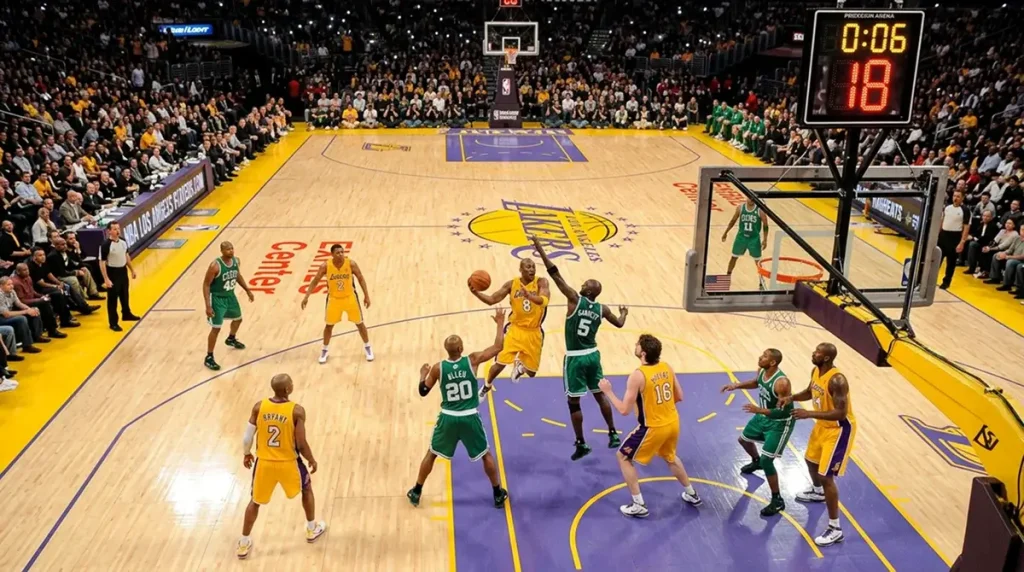
Contents
Why Live Betting Changed Everything About How I Approach NBA Markets
The first NBA in-play bet I placed was a disaster — a halftime moneyline on a team trailing by 14 points because I “felt” they would come back. They did not. But that loss taught me something the pre-match markets never could: in-play betting is not a faster version of pre-match betting. It is an entirely different discipline with its own logic, its own traps, and its own edges. The NBA generates roughly 290 million online bets monthly across UK sportsbooks when you count all sports, and the in-play share of that volume grows every season as operators invest in faster data feeds and more granular live markets.
In-play NBA betting means placing wagers after tip-off while the game is in progress. The odds update continuously — sometimes every few seconds — based on the score, game clock, possession, fouls, and momentum. UK bookmakers offer live spreads, live totals, next-team-to-score, live player props, and quarter-specific markets that only exist during the game. The speed is intoxicating, which is precisely why it demands more discipline than any other form of basketball betting.
See also NBA overtime rules and their statistical impact.
How Live NBA Odds Are Generated and Updated
Pre-match odds are set by traders who have hours or days to analyse a game. In-play odds are set by algorithms that process data feeds in milliseconds. The model ingests the current score, time remaining, team strength ratings, and historical patterns for similar game states, then produces a new price. A human trader supervises the model and can override it during unusual situations — a key player ejection, a fight, a lengthy review — but the vast majority of in-play price movements are algorithm-driven.
This matters because it defines where the edges are. An algorithm excels at processing quantitative data: score differential, time, shooting percentages. It struggles with qualitative information: a player limping after a hard foul, a coach’s body language suggesting a tactical shift, a crowd energy change after a disputed call. If you are watching the game and the algorithm is not capturing a visible change in game dynamics, the live odds will be briefly mispriced. That window is short — often 30 to 90 seconds — but it is the core mechanism behind profitable in-play betting.
The global basketball betting market was valued at 24.5 billion dollars in 2023 and is projected to reach 48.9 billion by 2032, and in-play products drive a disproportionate share of that growth. Bookmakers want you betting live because the margin on in-play markets is typically wider than pre-match — often seven to ten per cent versus five to seven per cent on pre-match spreads. You are paying for the convenience of betting in real time, and you need to account for that higher cost.
The Time-Zone Challenge for UK In-Play Bettors
I nearly burned myself out in my second season trying to bet NBA games live from London. The early games tip off at 11pm or midnight, and the late West Coast games do not start until 3:30am. Staying alert enough to process live odds, monitor game flow, and make disciplined decisions at 2am on a Wednesday is a different proposition from doing the same at 7pm on a Saturday.
My solution was simple and ruthless: I only bet in-play on the early slate. Games tipping off between 11pm and 1am UK time are the ones I watch live and trade actively. Anything starting after 1:30am gets a pre-match bet or no bet at all. The discipline cost me some opportunities, but the decision quality on the bets I did place improved dramatically. Fatigue is the silent killer of in-play returns, and no edge is large enough to survive consistently impaired judgment.
One practical workaround for late games: set alerts for specific game states. If a team you have a pre-match view on falls behind by ten or more points in the first half, the live odds will stretch to attractive levels. You can set an alarm, check the line, place a single bet, and go back to sleep. This is not true in-play trading — it is pre-match analysis with a live entry point, and it works better than pretending you can sustain sharp decision-making at 4am.
Which In-Play Markets Offer the Best Value
Not all live markets are created equal, and the margin differences between them are substantial. The live spread and live total — updated versions of the pre-match lines — carry the tightest margins because they attract the most volume. The bookmaker can afford to offer competitive pricing because the sheer number of bets diversifies their risk. These are the markets where I do 80 per cent of my in-play betting.
Quarter and half markets during the game offer interesting angles. A team trailing by eight points at half-time might be priced at 2.40 to win the third quarter outright, which is a much narrower question than whether they win the game. If your analysis of the matchup suggests the trailing team has a structural advantage in the half-court offence that gets neutralised by the other team’s transition game, and the second half typically slows the pace, the third-quarter line can offer genuine value. The bookmaker’s algorithm prices quarter markets based on full-game patterns, and it does not always adjust for the tactical shifts that experienced coaches make at half-time.
The markets I avoid in-play are the high-margin novelty bets: next team to score, race to a specific point total, and live same-game parlays. These carry margins above 15 per cent and are designed to capture impulsive action from bettors riding emotional momentum. Every pound placed on a “next team to score” bet at 1.80 per side represents a 10 per cent margin — roughly double what you pay on a live spread. The pricing on quarter-specific markets at least reflects a quantifiable outcome rather than a coin-flip event.
See also bets for nba for the complete NBA betting guide.
Discipline Systems That Protect In-Play Profits
In-play betting is the most dangerous format for impulsive bettors because the feedback loop is immediate and continuous. You lose a bet, the next opportunity appears 30 seconds later, and the temptation to chase is overwhelming. I have watched sharp bettors — people who are profitable pre-match — destroy entire months of profit in a single in-play session because they abandoned their rules when the adrenaline kicked in.
My in-play system has three non-negotiable rules. First, I set a session budget before any game starts: a fixed amount I am willing to risk across all in-play bets that evening, regardless of outcomes. When that budget is gone, I stop. Second, I never place an in-play bet within 60 seconds of a previous bet settling. That cooling-off period is long enough to interrupt the chase impulse and short enough that I do not miss genuine opportunities. Third, I write down the reason for every in-play bet in a note on my phone before placing it. If I cannot articulate the reason in one sentence, the bet does not get placed.
These rules cost me opportunities. They also saved my bankroll during the stretches when I was wrong about games more often than I was right. In-play betting rewards restraint more than aggression, and the punters who treat it as a precision tool rather than a rapid-fire entertainment product are the ones who come out ahead across a full NBA season. The UKGC introduced financial vulnerability checks in February 2026, and while those checks target the highest-risk gamblers, the underlying principle applies to everyone: know your limits before the game starts, not after the third quarter.
