
NBA Home Court Advantage for UK Bettors: How Much the Crowd, the Travel and the Whistle Really Matter
 Available in US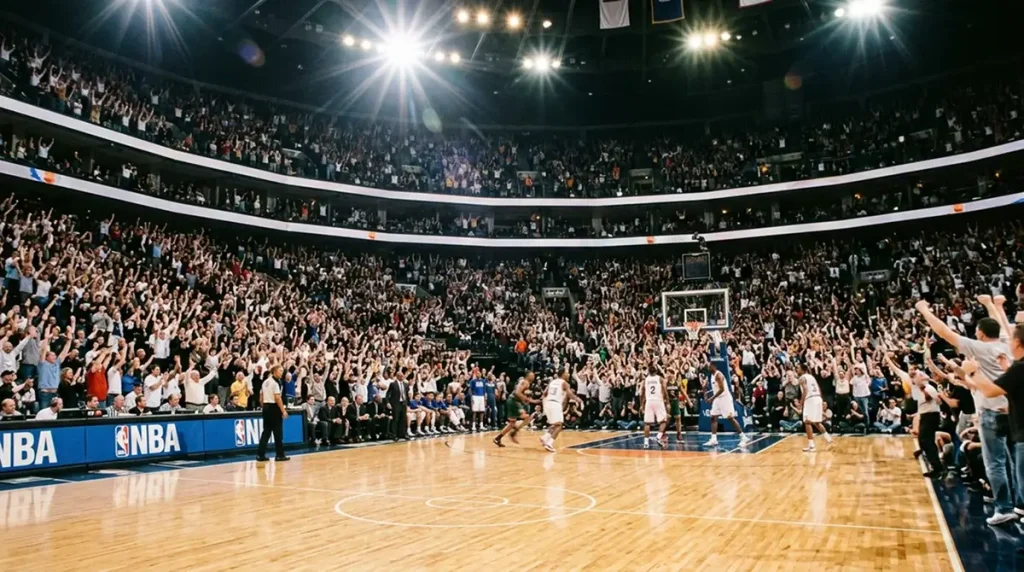
The first NBA game I ever attended in person was at Madison Square Garden. The Knicks were down eight heading into the fourth quarter, and the building was already half-deflated. Then they went on a 14-2 run to start the final period, the crowd erupted, and the visiting team could not hear their own coach calling a timeout. New York won by six. I have never been more convinced that home court advantage is a physical force in basketball, not just a statistical curiosity.
For UK punters who watch NBA games on a screen thousands of miles away, home court advantage can feel abstract. It is not. It is baked into every spread you see, every total that gets posted, and every live line that shifts during a game. Understanding what drives it — and when it matters most — is worth real money at the sportsbook.
See also NBA live betting for overtime opportunities.
Contents
The Numbers Behind NBA Home Court Edge
Over the past decade, NBA home teams have won roughly 58% of regular-season games. That translates to a home court advantage of approximately 2.5 to 3 points per game in spread terms — meaning if two identical teams played on a neutral court, the one designated as home would be expected to score about three more points simply by virtue of sleeping in their own bed and playing in front of their own fans.
That three-point figure is baked into every sportsbook line you see. When the Celtics are listed as seven-point home favourites against a mid-table opponent, roughly three of those points come from home court and four come from the talent gap between the teams. If the same game were played on a neutral court, the line would be closer to four points. Knowing this breakdown lets you evaluate whether the book is over- or under-pricing the home advantage for a specific matchup.
The home edge is not uniform, though. Some arenas produce a larger advantage than others. Teams in Denver benefit from the altitude — visiting players noticeably fatigue in the fourth quarter. Teams in Miami and Phoenix play in warm-weather cities where visiting players arrive the night before and may not be fully focused. The NBA London Game in January 2026 drew 18,424 fans to the O2 Arena for a neutral-site matchup between the Magic and Grizzlies, and the absence of a true home crowd produced a game that played almost exactly to the neutral-court spread.
Why Home Court Advantage Has Shrunk Over the Past Decade
If you had told me ten years ago that the NBA’s home winning percentage would drop from 62% to 58%, I would have been sceptical. But the data is clear: home court advantage has eroded significantly since 2015, and several factors explain why.
First, travel conditions have improved. Teams now fly on chartered planes with medical staff, sleep specialists, and nutritionists. The physical toll of road trips has diminished compared to the era when players flew commercial and arrived exhausted. Second, the three-point revolution has made individual games more volatile. When both teams are launching thirty-plus threes per night, random variance in shooting percentage overwhelms the small edge that home court provides. A team shooting 38% from three on the road is not meaningfully different from one shooting 40% at home — both figures are within normal fluctuation.
Third, the league’s crackdown on biased officiating has narrowed the free-throw disparity between home and road teams. In the early 2000s, home teams averaged nearly three more free-throw attempts per game than visitors. That gap has shrunk to about 1.5 attempts, which translates to roughly one point of home advantage disappearing from the whistle alone. The global basketball betting market — valued at $24.5 billion in 2023 and growing at 7.5% annually — prices this reduced home edge into modern lines, but the adjustment lags behind the reality in certain situations.
Arenas Where the Home Edge Still Dominates
Not every arena has seen its home advantage shrink equally. Denver’s Ball Arena remains the toughest road game in basketball. The altitude of 1,609 metres above sea level creates a measurable oxygen deficit for visiting teams, particularly in the second half of games. Denver’s home record has consistently outperformed the league average by three to four percentage points over the past five seasons, and the handicap line for road teams visiting Denver routinely underestimates the altitude effect by half a point to a full point.
Salt Lake City presents a similar altitude challenge, though slightly less pronounced. Golden State’s Chase Center, Memphis’s FedExForum, and Miami’s Kaseya Center all rank among the toughest road environments based on visiting team performance. The common thread is not just crowd noise — it is a combination of crowd intensity, travel inconvenience, and arena-specific factors like lighting, court surface, and even the local food and nightlife scene that keeps visiting players up late.
For UK bettors, this arena-specific data is actionable. When a team visits Denver after playing in a different time zone the night before, the cumulative effect of altitude plus travel plus back-to-back fatigue can add two full points to the home advantage. The sportsbook prices each factor separately but often underweights the interaction between them. Stacking these edges is where schedule-aware bettors outperform the market.
Playoff Home Court Is a Different Animal
Everything I have said about regular-season home court advantage changes in the playoffs. Playoff crowds are louder, more engaged, and more hostile. Referees, despite the league’s best efforts, still tend to let the home crowd influence marginal calls. And the intensity of a seven-game series magnifies the psychological impact of playing on your own floor.
Home teams in the NBA playoffs have won at a higher rate than in the regular season in every decade since the three-point era began. The advantage in spread terms rises from roughly 2.5 points in the regular season to 3.5 or even 4 points in the playoffs, depending on the round. Conference finals and NBA Finals home advantages are larger still, because the remaining teams have earned the best records and therefore the most passionate fanbases.
I adjust my playoff betting to account for this amplified home edge. In the first round, I look for series where the higher seed’s home advantage is underpriced — particularly when the higher seed has a top-five home record during the regular season and the lower seed has a mediocre road record. In the conference finals and Finals, I lean toward unders in road games because visiting teams tighten up offensively under playoff pressure in hostile arenas.
See also bets for nba for the complete NBA betting guide.
Neutral-Site Games and What They Reveal
The NBA’s international games offer a natural experiment in what happens when home court advantage disappears entirely. The 2026 London Game, with viewership up 90% compared to the last UK-hosted game in 2019, was played on a true neutral court. Neither team had a crowd advantage, neither had slept in their own bed, and both had travelled from the US. The result played almost exactly to what the neutral-court spread implied, confirming that the home advantage priced into standard lines is real and correctly sized — at least in aggregate.
With the first regular-season NBA game scheduled for Manchester’s Co-op Live in 2027, UK punters will have another data point soon. I expect the Manchester game to follow the London pattern: both teams performing roughly at their neutral-court level, with the spread offering little edge on either side. The betting value in neutral-site games comes from player props and totals rather than the spread, because individual performance is less affected by the absence of a home crowd than team-level outcomes.
UK sportsbooks generate around GBP 1.42 billion in quarterly gross gambling yield from remote betting, and NBA’s growing profile in Britain means more of that money flows into basketball markets every season. Understanding home court advantage — where it is real, where it is overpriced, and where it has quietly evaporated — separates the punters who profit from the ones who simply participate.
