
NBA Draft Betting in the UK: How to Read Mock Drafts, Combine Data and Draft Night Markets
 Available in US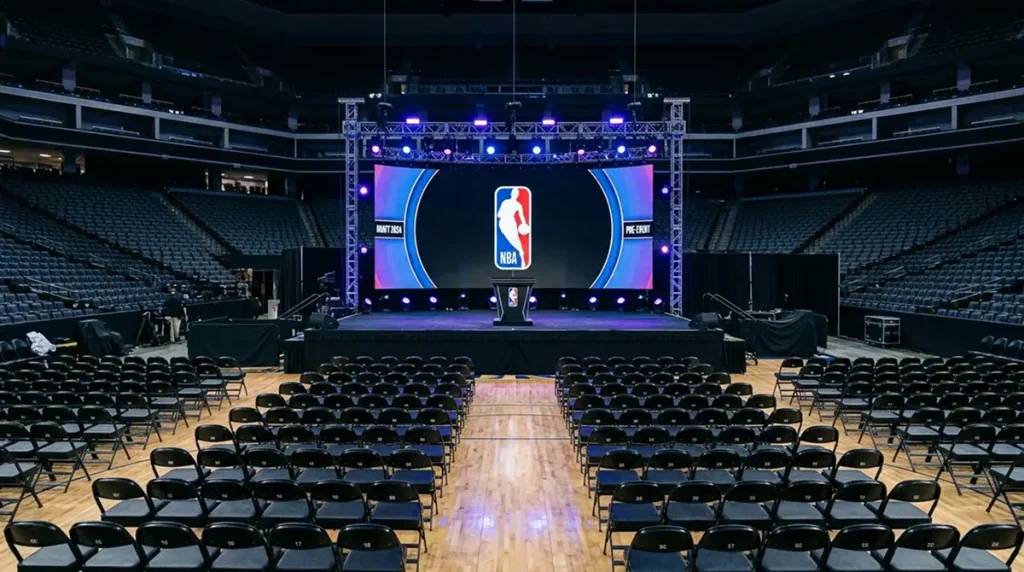
Contents
Draft Night Is the NBA’s Most Predictable Event — Until It Is Not
I backed the consensus first overall pick in six consecutive NBA drafts. Five of them landed. The sixth — the year a team traded up at the last minute and selected a player nobody had connected to that slot — wiped out two years of draft betting profits in a single evening. That is the paradox of NBA draft betting: the top picks are more predictable than almost any other sports market, but the unpredictable moments carry catastrophic downside because the odds are so short that one miss erases multiple wins.
The NBA Draft takes place annually in late June, and UK bookmakers have expanded their coverage significantly over the past five years. Markets now include first overall pick, top-three pick order, exact draft position for individual prospects, over/under on draft position, and total picks from specific conferences or international leagues. The event attracts a unique cross-section of bettors — basketball purists who follow college and international scouting, casual fans drawn by the spectacle, and information-advantage traders who exploit the gap between public mock drafts and private front-office intelligence.
See also NBA growth in the UK and why viewership matters.
Mock Drafts as a Pricing Tool, Not a Prediction Tool
The most common mistake in NBA draft betting is treating mock drafts as predictions. They are not. A mock draft is one analyst’s attempt to model 30 decisions made by 30 different front offices with 30 different sets of information, priorities, and interpersonal dynamics. The consensus mock — an aggregate of many individual mocks — is more reliable than any single one, but it still diverges from the actual draft in meaningful ways every year. On average, about 40 per cent of first-round picks deviate from the consensus mock position by two or more spots.
What mock drafts are useful for is identifying where the bookmaker’s odds align with or diverge from the consensus. If the consensus mock has a player going third overall and the bookmaker offers odds of 3.50 for exactly third, the implied probability is roughly 28.5 per cent. If historical data shows that players in the consensus third slot actually go third about 35 per cent of the time, there is a gap worth exploiting. The mock draft becomes a pricing benchmark, not a prediction you follow blindly.
I compile three separate consensus mocks from different source groups: traditional media scouts, analytics-focused outlets, and team-connected insiders. The overlap between all three groups identifies the strongest consensus picks. The divergence between them identifies the volatile slots where the market is most likely to misprice outcomes. The real edge in draft betting lives in that divergence zone, typically picks four through twelve, where the consensus fractures and the bookmaker must choose which narrative to anchor their odds to.
Combine and Workout Data: When New Information Moves Lines
The NBA Draft Combine — held in May, roughly six weeks before the draft — is the single largest information injection into draft betting markets. Players are measured, tested, and interviewed by all 30 teams over four days. Wingspan measurements, vertical leap numbers, agility drill times, and scrimmage performances all enter the public domain, and each data point can shift a prospect’s stock.
The market reaction to combine data is usually an overreaction. A player who measures two inches shorter than his listed height sees his draft stock plummet in mock drafts and betting markets, even when the height discrepancy was already known within the scouting community. A player who runs a standout three-quarter court sprint gets a stock boost that exceeds the actual predictive value of that drill. The combine creates narrative momentum, and narrative momentum moves betting lines further than the underlying data justifies.
Individual team workouts in June are harder to trade on because the information is private. Teams guard workout results closely, and the “reports” that leak to media are often strategic — planted by agents to boost a player’s perceived stock or by teams to disguise their actual interest. I treat all leaked workout information with extreme scepticism and never adjust my draft positions based on a single-source report. The NBA’s media ecosystem is sophisticated enough that deliberate misinformation is common in the pre-draft period, and the bookmaker cannot reliably distinguish signal from noise any better than you can.
Where the Draft Betting Edge Actually Lives
The highest-value draft bets I have placed over nine years share a common thread: they exploit the gap between public consensus and front-office incentive. Public consensus says a specific player is the obvious pick at a specific slot. Front-office incentive — driven by team needs, trade negotiations, and long-term roster construction — sometimes points in a different direction. When those two forces diverge, the bookmaker’s odds, which are anchored to public consensus, misprice the outcome.
Amazon Prime’s NBA viewership jumped 312 per cent year over year, and that expanded audience has increased casual interest in draft-night events, which broadens the betting market but also increases the volume of uninformed money shaping the odds. More casual money means the lines are anchored more heavily to the public consensus mock, which creates larger mispricings on the outcomes where front-office decisions diverge from that consensus.
The practical approach: identify two or three draft slots where the consensus is fragile — where mock drafts disagree and team needs create alternative scenarios. Focus your betting on those slots, using over/under draft position markets rather than exact-pick markets. Exact picks carry enormous variance because a single trade can shift an entire draft class, but over/under markets are more resilient to that variance. A bet on a player to be drafted in the top five at odds of 1.70 only fails if he falls to six or later, regardless of which specific team picks him or at which exact spot.
See also bets for nba for the complete NBA betting guide.
Draft Night Trading and the Live Information Cascade
Draft night itself is a live information event that unfolds over three to four hours. Each pick reveals new information: which players are off the board, which teams’ plans have been disrupted by unexpected selections, and which trades are in motion. The first regular-season NBA game in Manchester is confirmed for 2027, but draft night has been drawing UK NBA fans deep into the early morning for years — the event starts at midnight or 1am UK time and runs until 4am or later.
If you are awake and following live, the information cascade creates brief windows of mispriced odds. When a surprise pick occurs in the top five, the bookmaker must reprice all subsequent markets, and the speed of that repricing varies between operators. A player expected to go sixth whose stock is suddenly boosted because the prospect ahead of him was taken earlier than expected might see his top-five over/under move at one bookmaker before another adjusts. Those windows are narrow — minutes, not hours — but they are the most consistent edge I have found in NBA futures betting events.
The discipline required for draft-night trading is significant. You need to be monitoring multiple operator apps simultaneously, tracking each pick against your pre-draft analysis, and making rapid decisions on which repriced markets offer value. I prepare a spreadsheet before draft night with my pre-draft rankings, my target bets at specific price thresholds, and a hard stop-loss for the session. Without that preparation, draft night becomes a four-hour gambling session rather than a structured trading event. With it, the draft is one of the best information-advantage opportunities in the NBA betting calendar.
